Human Eggs Prefer Some Men's Sperm Over Others, Study Finds
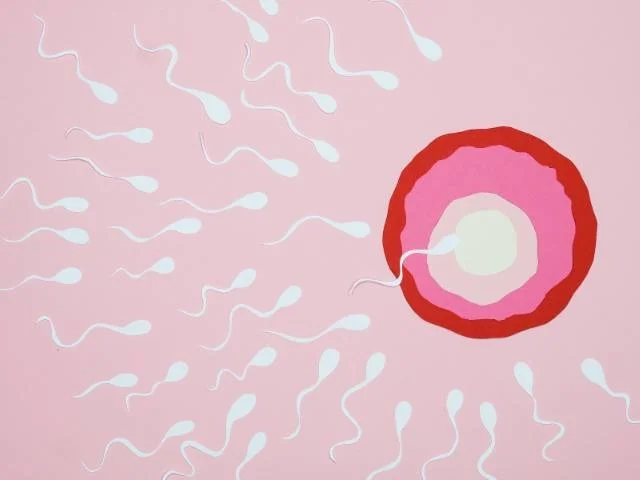
For decades, fertility research treated fertilization like a race between sperm and a recent study suggests the egg may play a more active role in sperm selection than scientists once believed.
Researchers from Stockholm University and the University of Manchester found that chemicals surrounding a woman’s egg attract some men’s sperm more strongly than others.
Interestingly, in many cases, the stronger attraction was not reflected towards the sperm of woman’s actual partner.
The study was published in Proceedings of the Royal Society B.
What researchers found?
The team studied follicular fluid, the liquid that surrounds an egg during ovulation. This fluid releases chemical signals that sperm can detect and swim toward.
Researchers used a number of samples from couples undergoing IVF treatment, and tested how sperm from different men responded to follicular fluid from different women.
The results were consistent across repeated experiments.
Key findings included:
- Eggs attracted 18% to 40% more sperm from some men compared to others
- The concentration of sperm in the follicular fluid was 10 times higher than in control solutions
- A woman’s follicular fluid did not consistently attract her partner’s sperm more strongly than sperm from another man
- The same sperm performed differently depending on which woman’s follicular fluid it encountered
Why did the sperm react differently towards different eggs?
Researchers believe progesterone signaling may explain part of the effect.
Sperm contain channels called CatSper that respond to progesterone and related chemicals. When activated, sperm movement becomes faster and more targeted.
Each woman’s follicular fluid appears to contain a slightly different chemical mix.
Some men’s sperm reacted strongly to one woman’s fluid while barely responding to others.
That means compatibility between egg and sperm may matter in ways current fertility testing does not measure or understand.
Why this matters in IVF?
Today, around one in four infertility cases are classified as unexplained infertility. Now, these are cases where hormone levels, ovulation, sperm counts, and scans all appear normal, but the couple is unable to achieve a pregnancy.
This study raises the possibility that sperm and egg may sometimes be chemically incompatible despite otherwise normal test results.
That interaction is not currently measured in routine fertility testing or IVF screening.
Patients undergoing fertility treatment often experience unexplained fertilization or implantation failure despite normal test results.
What the study does not prove?
Some of the findings have been exaggerated online.
The study did not show eggs consciously “choosing” sperm or rejecting partners. It also did not prove that eggs prefer genetically superior men.
The experiments were performed in laboratory conditions using IVF samples and follicular fluid analysis.
Researchers only showed that sperm responses changed depending on the chemical environment surrounding the egg.
However, the findings add to growing evidence that fertilization is more complex than a simple race between sperm. The egg may influence the process more than scientists previously understood.