IVF guide
IVF process: step by step
Reviewed by Dr. MeenakshiLast updated
The IVF process looks complicated sometimes and might even sound intimidating at first, but it follows a clear order: stimulate the ovaries to collect multiple eggs, fertilize them with the sperm, allow the embryo to grow for 3-5 days and transfer it to the uterus.
From the first injection to the pregnancy test, one IVF cycle takes four to six weeks. Most of that time you are at home, with short clinic visits every few days.
Knowing what happens on each day makes it easier to plan work, travel and the questions you want to ask your doctor.
Traveling abroad for IVF? You can do the initial tests and consultation locally, which keeps your stay near the clinic shorter.
- for one IVF cycle, first injection to pregnancy test
- 4-6 weeks
- for one IVF cycle, first injection to pregnancy test
- of hormone injections
- 8-12 days
- of hormone injections
- near the clinic for a fresh transfer
- 15-18 days
- near the clinic for a fresh transfer
When is IVF recommended?
IVF is recommended if you’ve been trying to conceive without success for 6-12 months. The recommendation is based on the cause of infertility, not on age alone. Infertility can be caused by a number of factors including:
- Blocked or damaged fallopian tubes
- Low sperm count or poor sperm movement
- Endometriosis
- Low ovarian reserve or age-related decline in egg numbers
- Ovulation problems that did not respond to medication
- Unexplained infertility after other treatments
- Using donor eggs, donor sperm or a surrogate
- Testing embryos for a known genetic condition
Whether or not you need IVF is decided by your test results, age and diagnosis. The doctor will study your reports and scans at the first consultation, while they also examine your overall health and lifestyle.
What to expect at your first IVF consultation?
During the first consultation the doctor reviews your medical history and any previous treatments. A few blood tests will be done to check your hormone levels and scans to check your ovaries and uterus. This will also help decide the dose and type of medication to be used for stimulation. Many of these can be done at a local lab before you choose or travel to an IVF clinic.
For the woman
- AMH blood test: estimates how many eggs your ovaries are likely to produce.
- Day 2 or 3 hormone bloods: usually FSH, LH and estradiol, taken early in your period.
- Pelvic ultrasound: counts the small follicles in each ovary (antral follicle count) and checks the uterus and ovaries.
- Uterus check: if needed, a saline ultrasound or hysteroscopy to look for polyps, fibroids or scarring.
- Other bloods: thyroid function, prolactin, blood group and rubella immunity.
For the man
- Semen analysis: sperm count, movement and shape.
For both partners
- Infection screening: HIV, hepatitis B and C, and syphilis. Clinics require this before handling eggs, sperm or embryos.
Some clinics also ask for genetic carrier screening. If you have results from earlier tests or treatment, bring copies: they can save you repeating some of them.
The IVF process step by step
- 1
Ovarian stimulation (8 to 12 days)
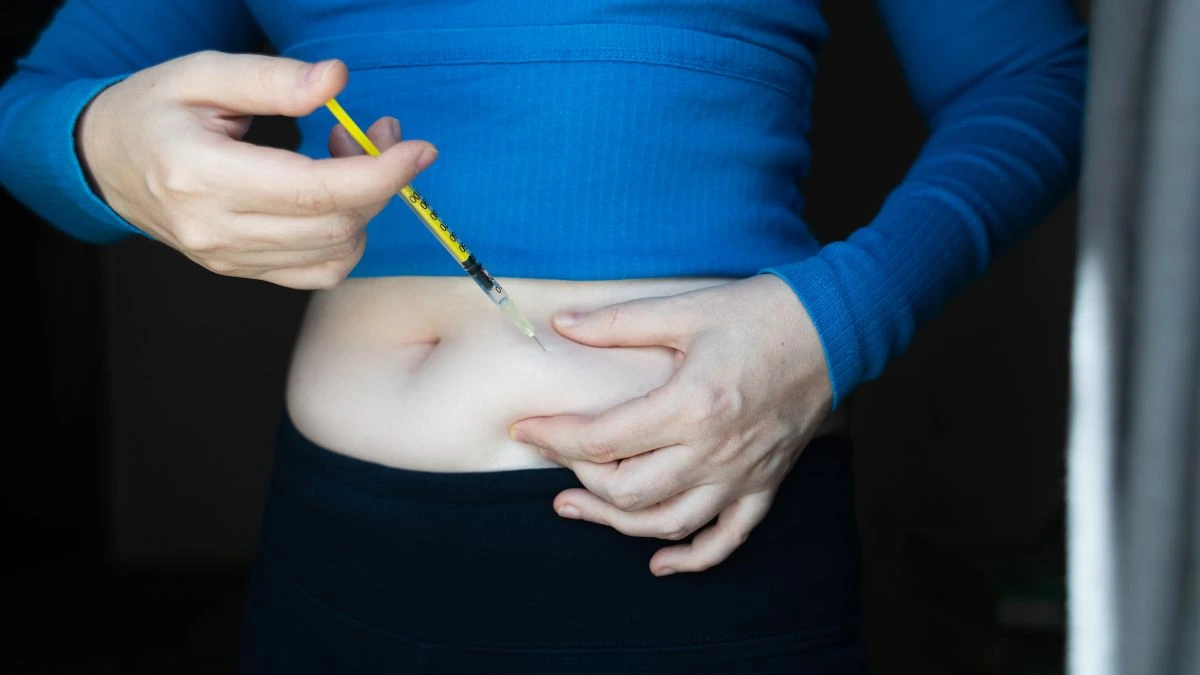
Daily hormone injections (FSH, sometimes with LH) start on day 2 or 3 of your period. They help several eggs mature at once instead of the usual one. You or your partner give them at home, as a small injection under the skin of the belly.
- 2
Preventing early ovulation
From day 5 or 6 of injections, a second daily injection (an antagonist) is added so the eggs are not released before collection. Some clinics use a "long protocol" instead, which starts medication in the previous cycle.
- 3
Monitoring scans and blood tests
Every two to three days you visit the clinic for a vaginal ultrasound and an estradiol blood test. The doctor adjusts your dose based on how the follicles grow.
- 4
The trigger injection
When enough follicles reach 17 to 20 mm, you take a final "trigger" injection (hCG or a GnRH agonist) at the exact time the clinic gives you, often late at night. It completes egg maturation.
- 5
Egg retrieval (34 to 36 hours after the trigger)
Under light sedation, the doctor collects eggs with a thin needle guided by ultrasound. It takes 15 to 30 minutes, and you go home the same day.
- 6
Fertilization (same day)
The eggs are mixed with sperm (conventional IVF) or a single sperm is injected into each egg (ICSI). ICSI is used when sperm count or movement is low, or after poor fertilization in a past cycle.
- 7
Embryo culture (days 1 to 6)
The lab checks fertilization the next morning. Embryos grow for three to six days, and many clinics now wait for the blastocyst stage on day 5 or 6.
- 8
Embryo transfer (day 3 or 5 after retrieval)
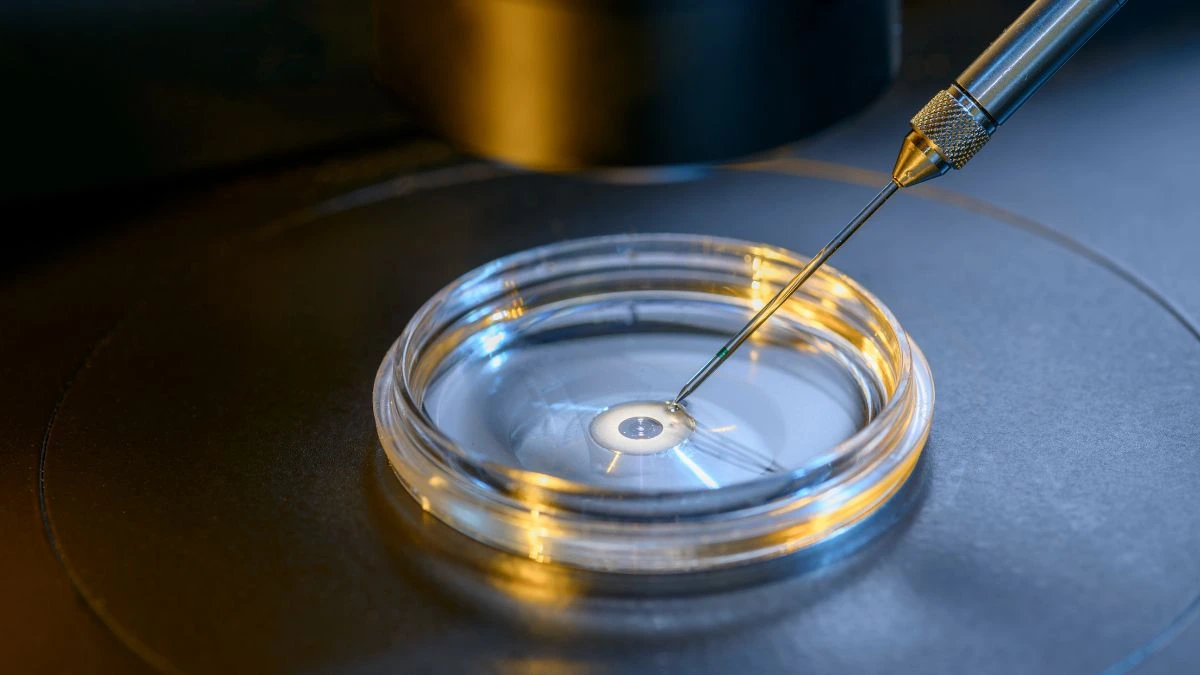
One embryo is placed in the uterus through a thin catheter, guided by ultrasound. No anesthesia is needed, and it takes 5 to 10 minutes. Good-quality spare embryos can be frozen.
- 9
Luteal support
Progesterone, by vaginal gel, pessaries or injection, supports the uterine lining from the day of retrieval until the pregnancy test and, if positive, for several more weeks.
- 10
Pregnancy test (9 to 14 days after transfer)
A blood test measures hCG. If it is positive, a first ultrasound follows two to three weeks later to check the pregnancy sac and heartbeat.
IVF timeline: day by day
Typical days for a standard (antagonist) cycle, counted from day 1 of your period.
- Day1-3
Baseline tests
At the clinic or a local lab
Your period starts. A scan and hormone bloods confirm you are ready to begin.
- Day2-3
Stimulation starts
At home
Daily hormone injections begin and continue for 8 to 12 days.
- Day6-7
First monitoring scan
At the clinic
A scan and estradiol blood test. A second daily injection is added to prevent early ovulation.
- Day8-12
Monitoring
At the clinic
Scans every 2 to 3 days while the doctor adjusts your doses.
- Day12-14
Trigger injection
At home
One injection at a set time, often late at night, once follicles reach 17 to 20 mm.
- Day14-16
Egg retrieval
At the clinic
34 to 36 hours after the trigger, under sedation. You go home the same day.
- Day15-17
Fertilization check
At home, while the lab works
The lab confirms how many eggs fertilized, and you start progesterone at home.
- Day19-21
Embryo transfer
At the clinic
A day 5 embryo is transferred, or all embryos are frozen for a later transfer.
- Day28-35
Pregnancy test
At the clinic or a local lab
An hCG blood test, 9 to 14 days after the transfer.
Your days will move with your clinic's protocol and how your ovaries respond. With a frozen transfer or PGT, the transfer itself moves to a later cycle.
Fresh vs frozen embryo transfer
Fresh transfer
A fresh transfer places an embryo in the uterus three or five days after egg retrieval, in the same cycle.
Frozen embryo transfer (FET)
A frozen embryo transfer (FET) happens in a later cycle, after the embryos are frozen by vitrification.
Clinics often recommend freezing all embryos and transferring later when:
- You are at risk of OHSS after stimulation
- Hormone levels or the uterine lining are not right for implantation in that cycle
- The embryos are being tested with PGT
An FET is planned around your natural cycle or with estrogen and progesterone to prepare the lining. Preparation takes two to four weeks, and the transfer visit itself is just around 4-5 days.
Time required for genetic testing with IVF
PGT (preimplantation genetic testing) is done to check the embryos for chromosomal problems (PGT-A) or a known inherited condition (PGT-M).
A few cells are taken from each blastocyst on day 5 to 7, and sent to a specialized lab for genetic testing. The embryos are frozen while the testing is underway and results take one to three weeks.
Once the clinic has the results, they will inform you and prepare for a frozen embryo transfer.
IVF side effects and risks
Most common side effects in IVF result from the administration of stimulation hormones and settle within a week or two of egg retrieval.
- Common side effects: bloating, mild pelvic discomfort, breast tenderness, mood changes, headaches and bruising at injection sites.
- Ovarian hyperstimulation syndrome (OHSS): the ovaries over-respond, causing swelling, abdominal pain and fluid build-up. Moderate to severe OHSS occurs in about 1-5% of IVF cycles, according to ASRM guidance. Freezing all embryos and using a GnRH agonist trigger lower the risk further.
- Egg retrieval risks: bleeding, infection or a reaction to sedation are rare.
- Multiple pregnancy: transferring more than one embryo raises the chance of twins, which is considered riskier for the mother and babies. Many clinics now prefer to transfer one embryo at a time. In the UK, 84% of embryo transfers in 2024 used a single embryo, and the multiple birth rate fell to 3.2%, according to HFEA data. Multiple embryo transfer is limited by IVF laws in some countries.
- Ectopic pregnancy: an embryo implants outside the uterus in about 2 in 100 IVF pregnancies (1.6% in the US in 2011, according to a CDC study); it is detected on the early ultrasound and treated with medication or surgery.
How long does IVF take?
You will need 4 to 6 weeks for the cycle itself. Before that, allow a few days for tests and the first consultation. If planned well, the whole process can be completed in the same month.
If your doctor suggests some pills or supplements to improve the egg/sperm quality before IVF, they will ask you to wait for 3-4 months before starting the cycle.
| Plan | What happens | Typical time near the clinic |
|---|---|---|
| IVF with fresh transfer | Stimulation, retrieval and transfer in one cycle | 15 to 18 days |
| IVF with frozen embryo transfer | Stimulation and retrieval first; transfer in a later cycle | 11 to 15 days, then 4 to 5 days on a second trip |
| IVF with PGT | As freeze-all, waiting for test results before the transfer | 11 to 15 days, then 4 to 5 days once results are back |
If you’re traveling overseas for IVF, you may choose to have the first part of the treatment locally, but it will require coordination between your local and foreign doctors.
Once the embryo is transferred, you can fly home within two days, and take the pregnancy test at home two weeks later.
Normally, it is advised to try and complete the entire cycle at one clinic so that, in case some adjustments need to be made to the medications or the plan needs to be changed mid-way, you have one doctor and team responsible.
IVF process and timeline questions
How many injections are needed during IVF?
Expect one or two injections a day through the ovarian stimulation phase, which lasts for 8-12 days. This is followed by one trigger injection, which completes the final maturation of the eggs and loosens them from the follicle wall, so they can be collected 34 to 36 hours later, just before they would be released.
After retrieval, a progesterone gel, pessary, or injection is given to strengthen the uterine lining.
Is egg retrieval painful?
Most people feel little or nothing as eggs are collected under anesthesia. Some women experience mild cramping and bloating for a day or two.
How many eggs are collected in one IVF cycle?
It varies widely with age and ovarian reserve. Normally 1 to 20 eggs are collected in an IVF cycle. More than the number, the egg quality matters. You can conceive with even one healthy, mature egg that fertilizes well and makes it to the day 5 embryo (blastocyst).
Can I work during IVF?
Yes, it is normal to carry on your regular work through stimulation. Plan to take the day of egg retrieval off, and maybe, the day after.
What is the two-week wait?
The pregnancy blood test is ideally done 9 to 14 days after your embryo transfer. A home urine test taken too early can show a false positive if you had an hCG trigger, as it stays in the body for up to two weeks.
Do I need to rest after embryo transfer?
No. Bed rest has not been shown to improve results; normal light activity is recommended. However, doctors usually ask you to skip strenuous activities or high intensity exercise for a few days post embryo transfer.
What happens if the first IVF cycle does not work?
One cycle does not always lead to a pregnancy, even with good-quality embryos. In the UK in 2024, the birth rate per embryo transferred was 38% for patients aged 18-34 and 8% for those aged 43-44.
If you have embryos frozen from the first cycle, you have as many chances as embryos to conceive. The doctor will prepare your uterus again for frozen embryo transfer, with no need to repeat stimulation.
If there are no frozen embryos, you can repeat the IVF cycle with possibly an altered approach.
References
- Fertility treatment 2024: trends and figures. Human Fertilisation and Embryology Authority (HFEA)
- Prevention of moderate and severe ovarian hyperstimulation syndrome: a guideline (2023). American Society for Reproductive Medicine (ASRM)
- Risk of ectopic pregnancy associated with assisted reproductive technology in the United States, 2001-2011. Centers for Disease Control and Prevention (CDC)