Can Egg Quality Be Improved Despite Age-Related Fertility Decline?
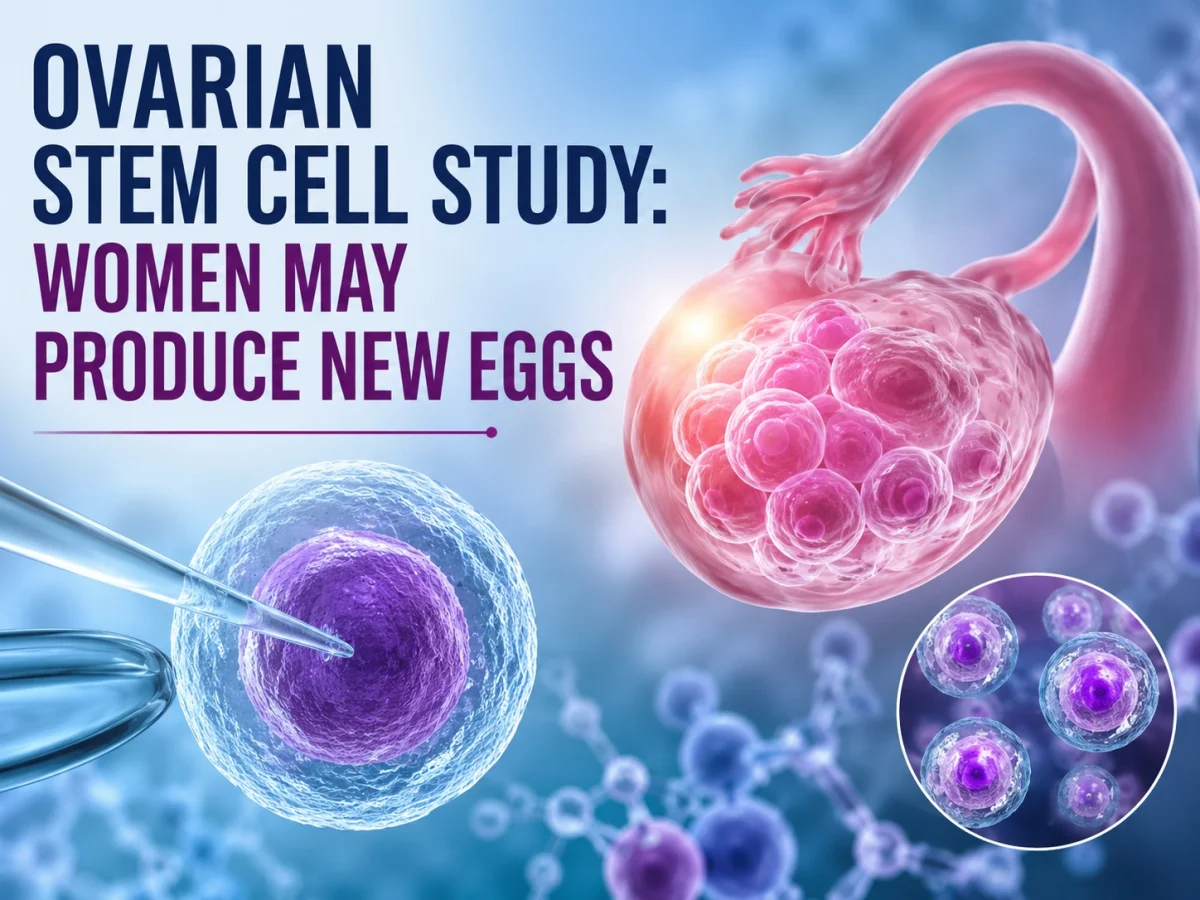
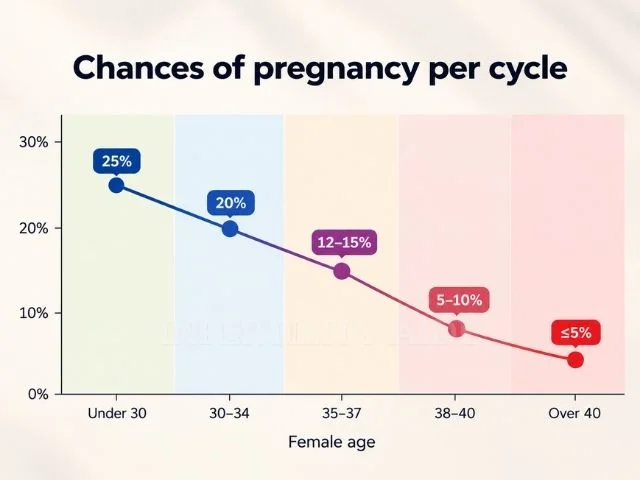
What does age-related fertility decline mean for you? As women get past their late 30s and early 40s, their egg count tends to decline. But there is another important part of the story: the remaining eggs become more vulnerable to chromosome errors.
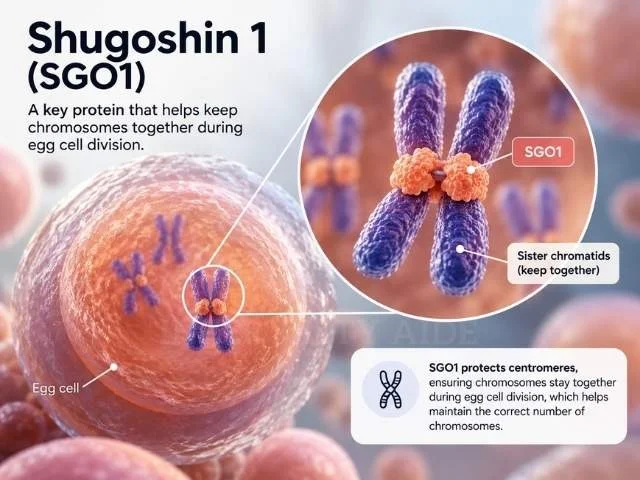
Now, researchers have identified a protein called Shugoshin 1 (SGO1) that may help protect aging eggs from one of the cellular problems associated with advancing age.
In an early study, restoring SGO1 in human eggs reduced a specific type of chromosome-separation error by approximately half. The finding is intriguing. However, it is still experimental research, not an established fertility treatment.
What causes age-related fertility decline?
Age-related fertility decline involves changes in both the number and quality of eggs.
Women are born with their lifetime supply of oocytes, and that ovarian reserve gradually declines with age. But the decline is not simply about having fewer eggs.
As eggs age, the machinery responsible for accurately separating chromosomes during cell division also becomes less reliable. This increases the risk of aneuploidy, meaning an egg has an abnormal number of chromosomes.
Aneuploidy is an important reason why fertility decreases with age and why miscarriage and chromosomal abnormalities become more common as maternal age increases.
Why does egg quality decline with age?
Human eggs are unusual cells. An egg begins meiosis before birth and then pauses for years and decades before completing the process.
During this long period, the structures that keep chromosomes correctly organized can deteriorate. One of the key systems that is responsible here, is called the cohesin complex. It is like a molecular glue, which holds duplicated chromosomes together until the appropriate stage of cell division.
With ovarian aging, this system becomes vulnerable to errors. If the chromosomes separate too early or incorrectly, the resulting egg may have an abnormal chromosome number.
Researchers have been investigating these mechanisms for years because chromosome errors are one of the main causes for declining egg quality with age.
What is SGO1 and why is it important?
SGO1 (short for Shugoshin 1) helps protect chromosome cohesion during meiosis.
The new study, published as a 2026 bioRxiv preprint, examined SGO1 in both mouse and human oocytes.
Researchers found that older mouse eggs had lower SGO1 levels. When they supplemented aged mouse eggs with Sgo1, chromosome-separation errors were significantly reduced. Infact, they became comparable to levels seen in younger eggs.
The researchers then looked at human eggs.
Older human oocytes also showed reduced SGO1. Experimentally supplementing SGO1 reduced the proportion of human eggs showing premature sister chromatid separation by approximately half.
That is significant because premature chromosome separation is one pathway through which aging eggs can become aneuploid.
Could SGO1 reverse age-related fertility decline?
Not yet. Sometimes the headlines can get ahead of the science.
The researchers did not demonstrate that giving SGO1 to women improves fertility. They did not show higher pregnancy rates, higher live-birth rates or more healthy babies.
The experiments were performed on eggs in the laboratory.
So, while the study suggests that one aspect of age-related fertility decline may be biologically modifiable, it does not demonstrate that fertility itself has been reversed.
This study has been presented at some fertility conferences, but not yet published in a peer-reviewed journal publication. The authors also disclose patent and company interests connected with the research.
That does not make the findings invalid. It simply means they should be interpreted as promising early research rather than established clinical evidence.
What does this mean for women over 35?
Age remains one of the strongest predictors of reproductive potential because both ovarian reserve and egg quality change as you age.
However, ovarian reserve and egg quality are not the same thing. This distinction matters when interpreting tests such as AMH.
What about low AMH and egg quality?
A low AMH result generally tells doctors more about ovarian reserve and expected response to ovarian stimulation than about whether an individual egg is chromosomally normal.
In fact, a recent study of more than 1,600 women aged 40 or younger found that low AMH was associated with fewer retrieved oocytes and more cancelled cycles, but did not independently predict oocyte quality or IVF/ICSI outcomes.
So, a low AMH result should not automatically be interpreted as “my eggs are poor quality.”
Age and AMH provide different pieces of information.
Why this research matters?
Scientists are increasingly looking beyond simply counting eggs.
Research into ovarian aging is examining the cellular processes that cause eggs to deteriorate, which includes the mechanisms of chromosome cohesion, spindle function, mitochondrial changes and others.
SGO1 is interesting because it points toward a different type of fertility research: instead of trying only to stimulate the ovaries to produce more eggs, researchers are asking whether some aspects of egg quality decline with age can be modified at the cellular level.
That could eventually lead to new approaches to reproductive aging.
There is currently no clinically proven SGO1 treatment that can restore egg quality or reverse age-related infertility.
What this SGO1 study means for egg quality and age?
The SGO1 study is an exciting piece of early research into age-related fertility decline.
Researchers found that SGO1 levels decrease in aging human eggs and that experimentally restoring the protein reduced a specific chromosome-separation error.
That does not yet mean that age-related fertility decline has been reversed.
The next question is much harder: can correcting this cellular problem actually produce more chromosomally normal embryos, higher pregnancy rates and more live births?
The research offers an important glimpse into the future of fertility science. Scientists may eventually be able to target some of the biological mechanisms behind ovarian aging and declining egg quality, rather than simply accepting them as irreversible consequences of getting older.
References
Saha D, et al. Restoring Shugoshin 1 reduces chromosome errors in human eggs. bioRxiv. 2026. https://www.biorxiv.org/content/10.64898/2026.01.08.698387v1
Carlson K, Sparzak PB. Age-Related Fertility Decline. StatPearls/NCBI Bookshelf. 2026. https://www.ncbi.nlm.nih.gov/books/NBK576440/
Huang, W., Li, X., Yang, H., & Huang, H. (2024). The impact of maternal age on aneuploidy in oocytes: Reproductive consequences, molecular mechanisms, and future directions. Ageing research reviews, 97, 102292. https://doi.org/10.1016/j.arr.2024.102292
Wang, M. J., Lin, M. H., Yang, J. H., Lee, R. K., & Lee, K. S. (2025). Low antimüllerian hormone (<1.2 ng/ml) does not impact oocyte quality and IVF/ICSI outcomes in women ≤40 years old. Taiwanese journal of obstetrics & gynecology, 64(2), 248–252. https://doi.org/10.1016/j.tjog.2024.02.007
Cimadomo D, Fabozzi G, Vaiarelli A, Ubaldi N, Ubaldi FM and Rienzi L (2018) Impact of Maternal Age on Oocyte and Embryo Competence. Front. Endocrinol. 9:327. doi: 10.3389/fendo.2018.00327