SAFE Fertility Group turns 20: Dr. Wiwat Quangkananurug on two decades of IVF in Thailand
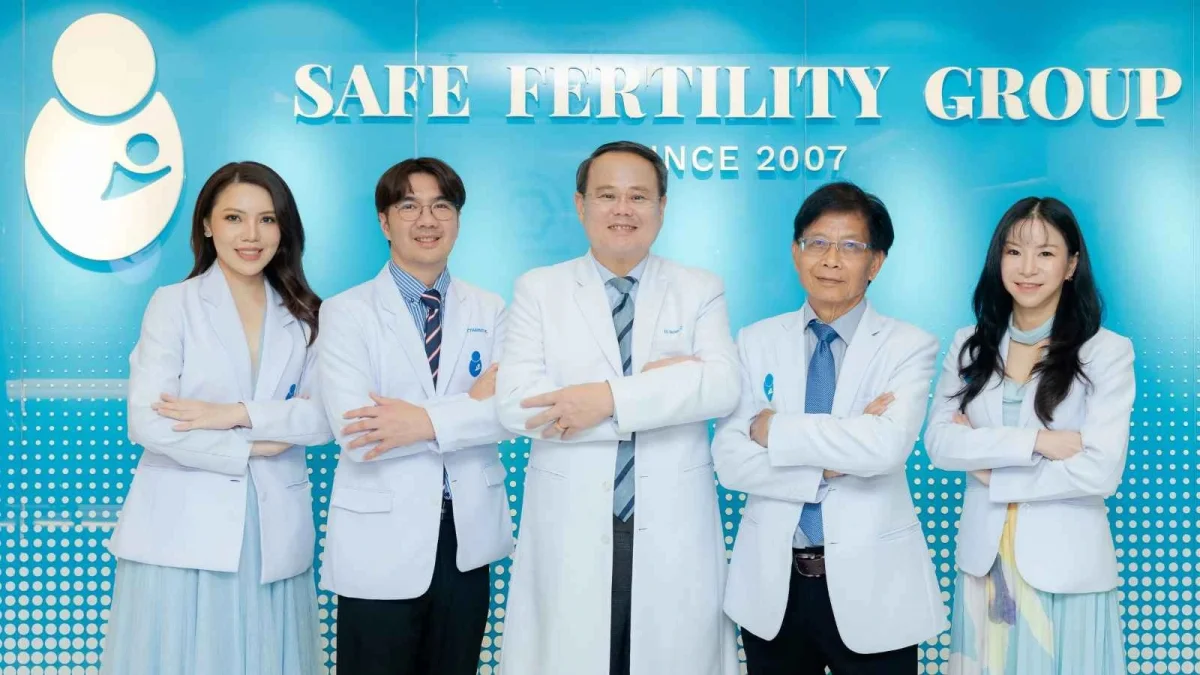
“Twenty years ago, IVF was a distant option for a small, specific group of people.” That is how Dr. Wiwat Quangkananurug, Founder and CEO of SAFE Fertility Group, and one of the most experienced doctors for IVF in Thailand (with more than 25 years in infertility care), remembers fertility care when he started SAFE.
Along the way, SAFE reports that it became the first clinic in Thailand to introduce time-lapse embryo monitoring (2012) and Illumina next-generation sequencing for embryo chromosome screening (2014).
In October 2026, the group marked its 20th anniversary with five centers across Thailand and its own genetics laboratory business.
To mark the milestone, we asked Dr. Wiwat about the two decades of his journey, the changes he has seen in fertility treatments and what advice he has for patients planning IVF treatment.
How has IVF in Thailand changed over the past 20 years?
Dr. Wiwat points to three developments that reshaped IVF at SAFE, each one building on the last.
Freezing and the freeze-all approach. In 2011, SAFE was among the first clinics in Thailand to offer egg, sperm and embryo freezing, and it launched egg freezing service in Thailand the same year. Its embryos have been preserved by vitrification ever since.
“Vitrification replaces the water inside the cells with a protective solution and cools the embryo so quickly that it becomes glass-like, without forming the ice crystals that can damage cells,” he explains. The embryos are then kept in liquid nitrogen at a constant -196°C.
Reliable freezing allowed SAFE to separate IVF into two stages, creating embryos and transferring them. In a freeze-all cycle, every viable embryo is frozen for a later frozen-thawed embryo transfer (FET).
Dr. Wiwat says the clinic uses this approach in three situations:
- When the risk of ovarian hyperstimulation syndrome (OHSS) is higher, so the body can recover before a pregnancy begins
- When the uterine lining needs proper preparation, so the transfer can be timed for when it is ready
- When the team is waiting for chromosome results from the lab
Continuous embryo monitoring. In 2012, SAFE became the first fertility clinic in Thailand to introduce the Time-Lapse incubator system. It follows embryo development with high-resolution imaging while keeping disturbance to the culture environment to a minimum.
Genetic screening. Embryo screening at SAFE has advanced in three stages:
- 2011: SAFE was the first in Thailand to introduce aCGH, which examines all of an embryo’s chromosomes, alongside PGT-SR.
- 2014: SAFE moved from microarrays to the Illumina Next-Generation Sequencing platform for PGT-A across all 24 chromosomes, again a first in Thailand. Dr. Wiwat says this improves the detection of numerical chromosome abnormalities.
- 2024: SAFE launched PGTseq-A, which combines targeted NGS with SNP technology, in partnership with JUNO Genetics in the USA.
A Day 5 to 6 blastocyst biopsy takes time to analyze, so freezing lets the embryo wait for its results and be transferred in a later, prepared cycle. In the doctor’s words, this is “why freeze-all and genetic screening developed together.” He adds that screening is used according to appropriate medical indications.
“Together, these changes shifted care from one-off cycles to a full patient journey: assessment, preservation, screening, and transfer when the patient and her body are ready,” he says. “The goal is a healthier baby and a more confident path for the family.”
What are the most common IVF misconceptions, and what can PGT testing really tell you?
Several of the beliefs Dr. Wiwat hears most often concern genetic testing. If you are still learning about the IVF process, these are worth understanding before a first consultation.
- “IVF guarantees a baby.” It does not. IVF is a medical treatment, and the results vary with your age, egg and sperm quality, embryo quality and individual health.
- “Technology can cancel out age.” “Age remains the biggest factor,” Dr. Wiwat says. Egg numbers and quality drop noticeably after 35, which is why he urges patients to plan early, if possible.
- “IVF is only for people who can’t conceive.” Many patients now come for fertility assessment, egg or sperm preservation, or genetic screening before they ever need treatment.
- “Genetic testing is about choosing traits.” Carrier screening and PGT are used to detect genetic conditions and chromosomal abnormalities for the health of the child. They are not for selecting characteristics.
- “PGT guarantees a baby.” PGT shows the chromosomes of an embryo and helps decide which embryo to transfer. Pregnancy still depends on how receptive the uterine lining is, the patient’s age and overall health, and whether the embryo implants. “A tested embryo still may not lead to a pregnancy, and PGT cannot detect every possible condition,” he says.
- “PGT guarantees there will be no miscarriage.” PGT screens for one cause of miscarriage: chromosomal abnormality in the embryo. Testing does not rule out other causes, such as the uterine environment, hormonal or medical conditions, or the mother’s age and health. Miscarriage can still happen after a screened embryo is transferred, and Dr. Wiwat is clear that it does not mean the patient did anything wrong.

Before you start, he hopes you will get assessed early, understand each step along with its possibilities and risks, and treat IVF as a process rather than a single attempt.
“Testing is a tool that gives us better information to make decisions with. It improves what we know, but it doesn’t remove uncertainty,” Dr. Wiwat said. “Patients who understand this are calmer, and that helps them throughout treatment.”
How does SAFE personalize IVF treatment, and what should you look for in a fertility clinic?
Every plan at SAFE starts with where the patient is today: age, hormone levels, ovarian reserve, sperm quality, medical history and any family history of genetic conditions.
Lifestyle is part of that assessment, because sleep, diet and stress all affect hormonal balance. Through its Lifestyle Modification approach, SAFE helps patients make these changes alongside treatment, “so the plan is built around the person, not a standard protocol,” said Dr. Wiwat.
He suggests weighing five things as you plan treatment and choose a clinic:
- Your timeline: whether the goal is a baby now or keeping options open for later
- Your history: previous treatment, family genetic history and existing health conditions
- The full journey: whether preservation, genetic screening or frozen embryo transfer fits your plan, beyond the next step
- Transparency: clear explanations of your options, the realistic possibilities and risks, and why a specific approach is recommended for you
- Credibility: accreditation by a recognized international organization such as RTAC, how the clinic manages patient safety, and whether it can show and explain its success rates openly
“A good treatment plan is one the patient understands and can make informed decisions about, with a clinic they can trust,” he says.
What happens after an unsuccessful IVF cycle?
“An unsuccessful cycle is a real loss, and patients are entitled to feel that,” says Dr. Wiwat. A failed cycle does not mean the patient did something wrong. IVF outcomes depend on biological factors no one can fully control, and stress or a single lifestyle choice is rarely the cause.
SAFE does not rush patients into another cycle. Its specialist doctors and scientists first review the cycle together, looking at:
- how the ovaries responded to stimulation
- how the embryos developed and their quality
- whether the uterine environment or genetic factors may have played a part
Depending on that review, the next step may be an adjusted protocol, further testing, embryo screening where medically indicated, or a frozen embryo transfer using embryos already in storage.
Whether, when and how to continue is the patient’s decision. “Emotional readiness matters as much as medical readiness,” he says. “Our role is to give clear information and support, and to avoid pushing patients in either direction.”
What does the future of IVF look like for patients?
Dr. Wiwat is most optimistic about two shifts:
- Prevention and planning. Expanded carrier screening, freezing and preimplantation screening are becoming more mainstream, moving care from reacting to problems toward planning ahead. At SAFE, that planning covers lifestyle and diet as well as hormone tests and check-ups, so couples begin treatment in the best possible position.
- More precise genetic testing. Combining PGT with Expanded Carrier Screening (ECS) can help families with a genetic condition reduce the chance of passing it on to their baby. “Couples who once had very limited options now have a clearer way forward,” he says.
For patients, he expects more information upfront, more flexibility in timing and a less stressful experience that begins well before treatment is needed.
“IVF is moving beyond treating infertility,” he says. “It will serve a much wider group of people: those facing infertility, and also those who simply want to give their child the healthiest possible start.”
SAFE Fertility through our patients' experience
SAFE was one of Infertility Aide's earliest associations in Southeast Asia, and patient feedback about their care has been favorable from the start.
"Their consistency was remarkable," says Dr. Deepika G., founder of Infertility Aide, recalling how satisfied most patients were and the confidence that inspired. "Our approach has always been very patient-centric, and Dr. Wiwat's team seemed perfectly aligned with that."
She remembers feedback from early patients and how quickly SAFE made changes if ever an issue was reported. "For me, that responsiveness explains why patients kept speaking well of them."
We congratulate SAFE Fertility Group and Dr. Wiwat Quangkananurug on 20 years of fertility care and look forward to following the next chapter of their work.
If you are considering IVF at SAFE Fertility, or would like a consultation first, you can view the doctors' profiles at SAFE Fertility Clinic in Bangkok and SAFE Fertility in Phuket, message the clinics directly and keep track of your appointments and your own timeline on Infertility Aide.